
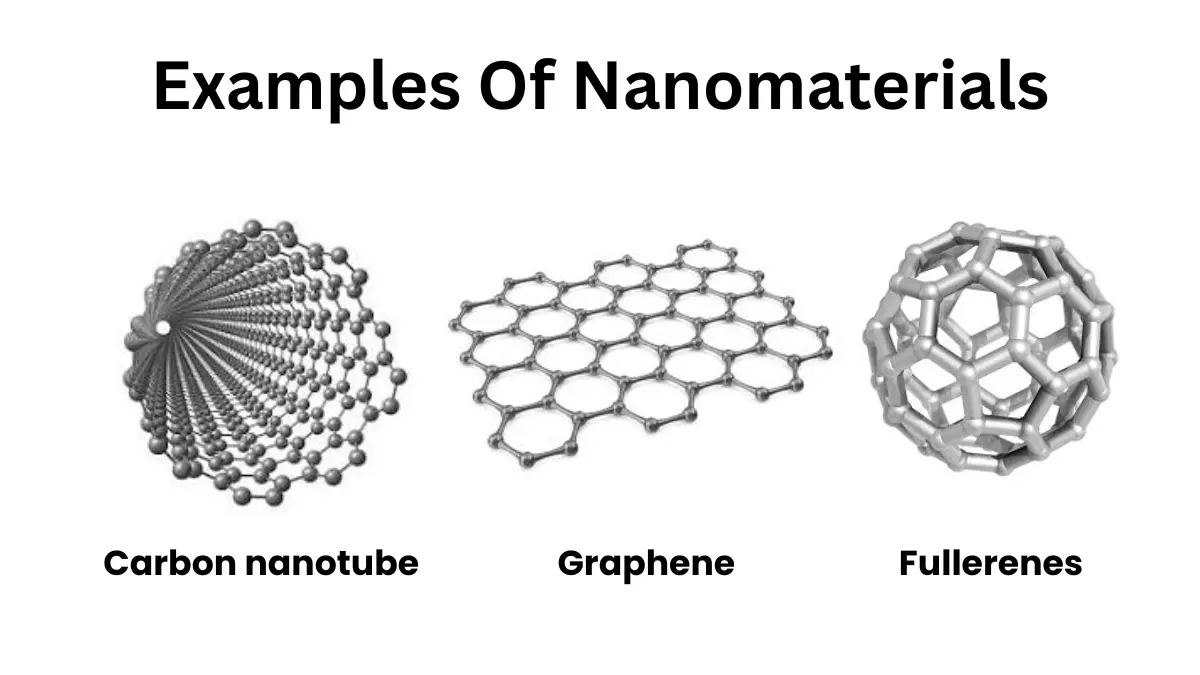
Examples of nanomaterials include carbon nanotubes, graphene, nanoparticles, quantum dots, nanoclay, fullerenes, and nano-coatings.
Nanomaterials are very tiny materials. These materials have at least one size between 1 and 100 nanometers. A nanometer is extremely small. It is one billionth of a meter. These can be stronger, lighter, and more reactive. Some can carry heat and electricity better. Nanomaterials can be found in nature, or they can be made in laboratories. They are used in medicine, electronics, energy production, water cleaning, and many other modern technologies.
Examples Of Nanomaterials
The main examples of nanomaterials include the following:
1. Silver Nanoparticles
Silver nanoparticles are extremely small particles of silver, usually less than 100 nanometers in size. These particles are widely used in wound dressings, coatings, textiles, and water purification because of their antibacterial properties. Excessive exposure to these particles can affect liver or kidney functions in humans.
2. Gold Nanoparticles
Gold nanoparticles are tiny particles of gold used in drug delivery, cancer therapy, and medical applications. They can enter the body through injections. These nanoparticles help deliver drugs precisely to target areas. Overexposure may affect cell health in high doses.
3. Titanium Dioxide Nanoparticles
Titanium dioxide nanoparticles are widely used in sunscreens, paints, coatings, and food additives. They can enter the body through the skin or by inhalation. These nanoparticles protect skin from UV radiation, improve paint and cosmetic quality, and act as a whitening agent. Excessive inhalation of these particles can cause lung irritation.
4. Zinc Oxide Nanoparticles
Zinc oxide nanoparticles are also used in sunscreens, cosmetics, and antibacterial products. They can enter the body through the skin or by inhalation in powder form. ZnO particles provide UV protection and prevent bacterial growth. High doses of these particles can cause cell toxicity or oxidative stress in humans.
5. Iron Oxide Nanoparticles
Iron oxide nanoparticles are magnetic and used in medical imaging, targeted drug delivery, and wastewater treatment. environmental cleanup. They improve MRI scans and controlled drug delivery. High exposure to these nanoparticles may cause oxidative stress in cells.
6. Fullerenes (C₆₀)
Fullerenes are spherical carbon molecules, often called “buckyballs.” They are used in drug delivery, electronics, and materials research. Fullerenes have antioxidant properties, strengthen materials, and support drug delivery. Overexposure to fullerenes can cause oxidative stress or cell toxicity.
7. Carbon Nanotubes
Carbon nanotubes are tiny tube-shaped structures made of carbon atoms. They are used in electronics, batteries, medical devices, and sports equipment because they are very strong and light. Inhaling large amounts of these particles may cause lung irritation and respiratory problems.
8. Graphene
Graphene is a single thin layer of carbon atoms arranged in a honeycomb pattern. It is used in electronics, batteries, sensors, and advanced materials because it is highly conductive and strong. Graphene improves the strength, flexibility, and electrical performance of products. Inhalation of graphene particles may cause lung irritation.
9. Quantum Dots
Quantum dots are semiconductor nanocrystals used in displays, solar cells, imaging, and sensors. They can enter the body through medical applications or laboratory handling. Quantum dots improve display brightness and efficiency in solar cells. Heavy accumulation of these metal-based quantum dots in the body can cause toxicity.
10. Nanowires and Nanorods
Nanowires and nanorods are very thin, rod-shaped nanomaterials. They are used in electronics, sensors, solar cells, and medical devices because they conduct electricity and heat efficiently. These nanoparticles improve electronic performance and enhance energy devices. Inhalation of these particles during production may cause respiratory irritation.
11. Nanofilms and Nanocoatings
Nanofilms and nano coatings are ultra-thin layers of nanomaterials. They are used in food packaging, medical equipment, and electronics. Exposure may occur during industrial applications. They increase strength, prevent corrosion, and block UV rays. Improper handling during spraying or coating may cause inhalation risks.
12. Silicon Dioxide Nanoparticles
Silicon dioxide nanoparticles, also called nano-silica, are very small particles made of silicon and oxygen. They are used in cosmetics to improve texture and in medicine for drug delivery. Exposure to these particles can occur through food and skin contact. High inhalation may cause lung inflammation.
13. Nanocomposites
Nanocomposites are materials made by combining nanoparticles with other substances like plastics, metals, or ceramics. They are used in automobiles, packaging, and construction. Exposure to these particles mainly happens during production or recycling. Nanocomposites increase strength and reduce weight.
14. Azo and Phthalocyanine Pigment Nanoparticles
These are nano-sized pigments used in inks, paints, and plastics. They improve color intensity. Exposure to these particles may occur during manufacturing or printing processes. They enhance color quality and UV stability in products. Excess inhalation of pigment nanoparticles may irritate the lungs or cause environmental concerns.
15. Dendrimers (Organic Nanomaterials)
Dendrimers are highly branched, tree-like synthetic nanomolecules. They are mainly used in drug delivery, gene therapy, and medical research because they can carry medicines directly to target cells. Exposure usually occurs in laboratory or medical settings. High concentrations of dendrimers may affect cell membranes and cause toxicity.
16. Natural/Other Nanomaterials
Natural nanomaterials occur in nature without human production. Examples include volcanic ash, sea spray particles, clay nanoparticles, and some biological molecules. Humans are exposed through air, water, and soil. Many natural nanomaterials play important roles in environmental processes and biological systems. Excessive inhalation of natural nanoparticles like dust may affect respiratory health.
Frequently Asked Questions
What are nanomaterials?
Nanomaterials are materials that have at least one dimension between 1 and 100 nanometers. Because of their very small size, they show unique physical, chemical, and biological properties.
What are the main examples of nanomaterials?
Common examples include carbon nanotubes, fullerenes (C₆₀), graphene, silver nanoparticles, gold nanoparticles, titanium dioxide nanoparticles, zinc oxide nanoparticles, silica nanoparticles, quantum dots, dendrimers, nanowires, nanorods, nanocomposites, and nanocoatings.
What are nanomaterials used for?
Nanomaterials are used in medicine, electronics, cosmetics, food packaging, textiles, solar panels, water treatment, and construction materials
What are natural nanomaterials?
Natural nanomaterials occur in nature, such as volcanic ash, clay nanoparticles, sea spray particles, and some biological molecules like proteins.
Are nanomaterials safe for humans?
Many nanomaterials are safe when used properly. However, high exposure through inhalation or ingestion may cause cell damage, lung irritation, or toxicity depending on the type of material.