
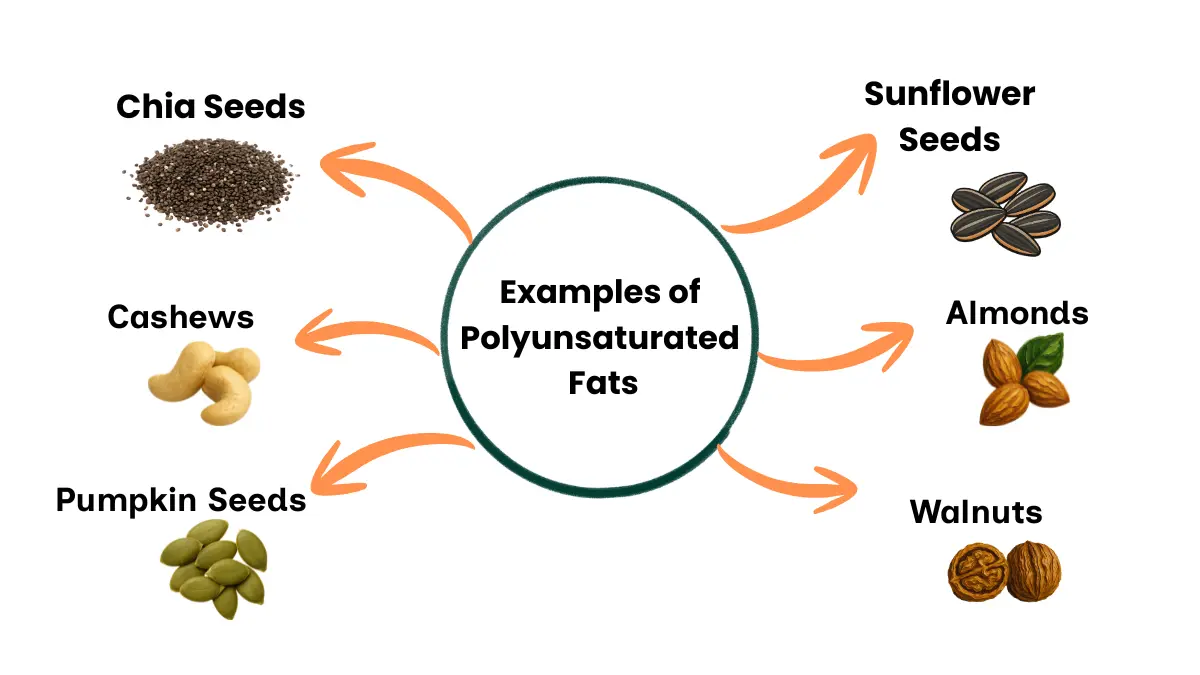
Examples of polyunsaturated fats include corn oil, sunflower oil, soybean oil, safflower oil, flaxseed oil, cottonseed oil, walnuts, pine nuts, pumpkin seeds, flaxseeds, chia seeds, sesame seeds, flax seeds, fatty fishes like salmon, herring, trout, sardines, mackerel, and tuna.
Polyunsaturated fats have two or more double bonds in their structure, which makes them liquid at room temperature. These fats include omega-3 and omega-6 fatty acids, which support heart health and brain functions.
Examples Of Polyunsaturated Fats
There are some simple examples of foods rich in polyunsaturated fats that we can include in our daily diet.
1. Soybean Oil
Soybean oil is also known as vegetable oil, and it is rich in omega-6 fatty acids. Soybean oil contains about 55 to 60% polyunsaturated fats. This oil is commonly used in salad dressings, mayonnaise, and cooking. Soybean oil helps lower bad cholesterol and supports heart health.
2. Corn Oil
Corn oil is also 100% fat, and around 50 to 60% of its fat is polyunsaturated. Corn oil has a neutral taste. This oil supports heart health. This oil is widely used for deep frying because it can handle high heat.
3. Sunflower Oil
Regular sunflower oil contains a high amount of omega-6 polyunsaturated fats. Sunflower oil has a light taste and is good for cooking and baking. This oil also helps lower bad cholesterol.
4. Safflower Oil
Safflower oil is a good source of polyunsaturated fats. This oil helps in reducing cholesterol and improving blood flow.
5. Flaxseed Oil
Flaxseed oil is very high in omega-3 fatty acids. This oil should not be used for cooking because high temperatures can damage its healthy fats. This oil is best for salad dressings.
6. Canola Oil
Canola oil contains both monounsaturated and polyunsaturated fats. This oil also provides a small amount of omega-3 fatty acids and is considered heart-friendly.
7. Walnuts
Walnuts contain about 60% total fat, and around 45 to 50% polyunsaturated fats. These nuts are very high in omega-3 fatty acids. These nuts support brain and heart health. These nuts are eaten raw, roasted, or added to cakes and salads.
8. Pine Nuts
Pine nuts contain about 40% of polyunsaturated fats. These nuts are mainly rich in omega-6 fatty acids. These nuts also provide magnesium and vitamin E, which help protect cells from damage. Pine nuts are used in salads, pasta, and sauces.
9. Almonds
Almonds contain about 15-20% of their fat as polyunsaturated fats. Almonds are rich in vitamin E and support heart health, are good for the brain, and the skin. Almond butter is also rich in fiber, which helps in digestion. Almonds are eaten raw, roasted, or soaked.
10. Cashews
Cashews contain about 44% total fat. Around 15-20% of their fat is polyunsaturated fats. Cashews also provide iron and magnesium. These nuts also support heart health and bones. Cashews are used in sweets and snacks.
11. Brazil Nuts
Brazil nuts contain about 66% total fat. Around 25-30% of their fat is polyunsaturated fat. These nuts are especially known for their high selenium content, which supports immune function and thyroid health. Brazil nuts are mainly eaten as snacks.
12. Hazelnuts
Hazelnuts contain about 60 to 61% total fat. Most of this fat is monounsaturated fat, but these nuts contain around 7 to 9% polyunsaturated fats. These nuts support heart health and reduce bad cholesterol when eaten in moderate amounts.
13. Flax Seeds
Flax seeds contain about 42% total fat, and around 70%of that fat is polyunsaturated. These seeds are mainly rich in omega-3 fatty acids called. These seeds support heart health and help reduce inflammation. Grinding them improves absorption. Flax seeds can be added to yogurt, oatmeal, or homemade bread.
14. Chia Seeds
Chia seeds contain about 31% total fat, and around 75 to 80% of their fat is polyunsaturated. Chia seeds are mainly rich in omega-3 fatty acids. These seeds also contain a high amount of fiber, which helps improve digestion. These seeds are commonly used in chia pudding and mixed into milk.
15. Sunflower Seeds
Sunflower seeds contain about 51% total fat, and around 60 to 65%of that fat is polyunsaturated. Sunflower seeds are mainly rich in omega-6 fatty acids and are an excellent source of vitamin E, which protects body cells from damage. Sunflower seeds can be eaten as a snack and added to salads.
16. Pumpkin Seeds
Pumpkin seeds contain about 49% total fat, and around 45 to 50% of that fat is polyunsaturated. These seeds provide magnesium, zinc, and iron. These nutrients support immune function, muscle health, and energy production. Pumpkin seeds can be roasted and eaten as a snack, and added to salads
17. Sesame Seeds
Sesame seeds contain about 50% total fat, and around 40 to 45% of that fat is polyunsaturated. These seeds provide healthy omega-6 fats and contain antioxidants that support heart health. These seeds are sprinkled on bread, or added to stir-fried dishes and salads.
18. Salmon
Salmon is one of the richest sources of omega-3 fatty acids. These omega-3 fats support heart health and brain development. Salmon is also rich in high-quality protein, vitamin D, vitamin B12, and selenium. This fish can be grilled, steamed, baked, or added to salads and sandwiches.
19. Mackerel
Mackerel is a fatty fish that contains a high amount of omega-3 polyunsaturated fats. Mackerel supports heart health by reducing blood pressure and lowering bad cholesterol. This fish is also rich in vitamin B12, which helps in red blood cell formation. Mackerel can be grilled, smoked, or eaten canned.
20. Sardines
Sardines are small fish but very rich in omega-3 fats. This fish also provides calcium, proteins, and vitamin D. This fish supports heart health, reduces inflammation, and helps maintain strong bones. Sardines can be eaten canned, added to toast, mixed into pasta, or used in salads.
21. Herring
Herring is another oily fish that contains high amounts of omega-3 polyunsaturated fats. A large percentage of its fat is polyunsaturated. Herring supports heart health and helps reduce the risk of heart disease. Herring is often eaten smoked or pickled and can be served with salads or bread.
22. Trout
Trout is another good source of omega-3 fatty acids. This fish supports brain function, reduces inflammation, and improves heart health. Trout also supplies high-quality protein, vitamin B12, and potassium. Trout has a mild flavor and can be grilled and baked.
23. Tuna
Tuna also provides omega-3 fatty acids. Fresh tuna contains more omega-3fatty acids than canned light tuna. Tuna supports health and brain functions. This fish is also high in protein. Tuna can be eaten fresh, grilled, or canned and used in sandwiches, pasta, or salads.
Frequently Asked Questions
What are examples of polyunsaturated fats?
Examples include sunflower oil, soybean oil, corn oil, safflower oil, flaxseed oil, walnuts, pine nuts, sunflower seeds, flax seeds, salmon, and tuna. These foods are rich in omega-3 or omega-6 fatty acids.
What are polyunsaturated fats?
Polyunsaturated fats are fats that contain two or more double bonds in their chemical structure. These fats are usually liquid at room temperature. These fats include omega-3 and omega-6 fatty acids.
Which nuts are highest in polyunsaturated fats?
Walnuts and pine nuts contain the highest amount of polyunsaturated fats among common nuts. Brazil nuts and almonds also provide moderate amounts.
Are polyunsaturated fats better than monounsaturated fats?
Both are healthy fats. Polyunsaturated fats provide essential omega-3 and omega-6 fatty acids, while monounsaturated fats also support heart health. A balanced diet should include both types.
Can eating too much omega-6 be harmful?
Omega-6 fats are necessary for the body, but too much without enough omega-3 may increase inflammation. It is important to maintain a proper balance between omega-3 and omega-6.