
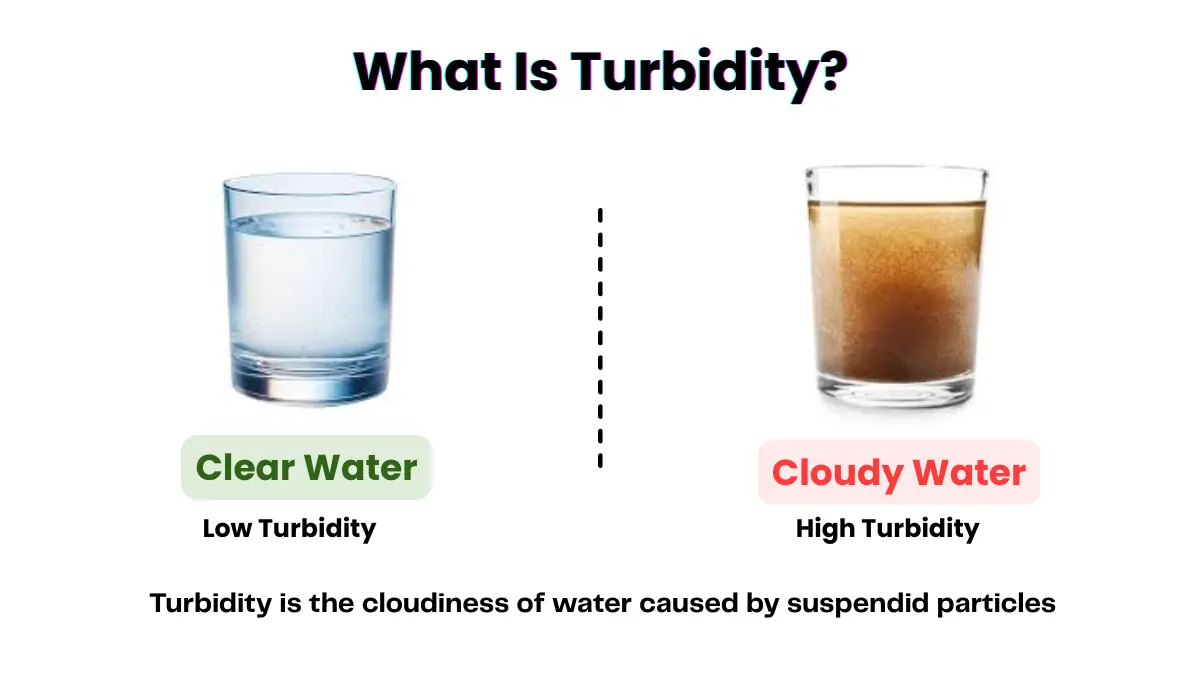
Turbidity means how cloudy or unclear the water is. Water becomes turbid when small particles float in it. These small particles are called suspended solids. These particles can be dirt, sand, algae, or even pollution. Because of these tiny particles, the water appears cloudy or muddy.
- Clear water has low turbidity.
- Cloudy water has high turbidity.
Causes of turbidity in water
Turbidity increases when solid particles enter water and remain suspended instead of settling at the bottom. There are many causes of turbidity. The main causes are:
Soil Erosion
Soil erosion is one of the biggest causes of turbidity. When it rains, water flows over the soil. Water flowing over the surface carries this soil into rivers, streams, and lakes. This makes the water muddy.
Urban Runoff
In cities, rainwater can not soak into the ground because of concrete roads and buildings. Rainwater flows over surfaces, picks up dirt, oil, chemicals, and plastics. Then this water flows into rivers without filtering. This sudden flow increases turbidity.
Algae Blooms
Sometimes water appears cloudy and green due to the rapid growth of algae. Algae are small plants that grow very fast when water has too many nutrients like nitrogen and phosphorus.
Fish Activity
Some fish live and feed near the bottom of rivers, lakes, or ponds. When they swim, dig, or search for food, they kick up mud, sand, and dirt from the bottom. This dirt mixes with the water and makes it look cloudy.
Waste Discharge
Waste discharge from factories, sewage, or households adds dirt, chemicals, and organic matter to rivers and lakes. These particles mix with water and make it cloudy, increasing turbidity. High turbidity from waste can reduce sunlight and affect aquatic plants.
Effects Of Turbidity On Aquatic Life
Fish that live in the water need clean water to survive. High turbidity harms aquatic life in many ways:
Hard to Breathe
Fish breathe using gills, which absorb oxygen from water. Turbid water contains tiny particles like clay and organic matter. These particles can get stuck in fish gills. These particles block fish gills. When gills are blocked, fish cannot absorb enough oxygen.
This makes them struggle to breathe, reduces growth, and may lead to death if exposure is long-term.
Blocked Sunlight
Sunlight is necessary for photosynthesis, the process plants use to make food and oxygen. Turbidity makes water cloudy. As a result, sunlight can not pass through.
Aquatic plants in deeper water receive less light. This slows down or stops photosynthesis. This reduces plant growth and weakens the water ecosystem.
Less Oxygen
When sunlight is blocked (due to turbidity), photosynthesis drops. Less photosynthesis will lead to less oxygen in the water. Low oxygen can cause fish death in extreme cases.
Egg Damage
Fish lay eggs in water. These eggs need clean water for oxygen. In turbid water, suspended particles settle on eggs, covering them. This layer blocks oxygen from reaching the eggs. As a result, eggs fail to hatch and reduce the fish population over time.
Impacts Of Turbidity On Drinking Water
High turbidity can harm human health in many ways:
Unsafe Drinking Water
Drinking water must be clear. Suspended particles in turbid water can carry harmful microorganisms like bacteria, viruses, and parasites. These microorganisms can survive water treatment if the turbidity is high, because particles protect them from chlorine. Drinking such water increases the risk of waterborne diseases like typhoid.
Bad Appearance
Turbid water looks cloudy, muddy, and brown. No one likes to drink or swim in dirty water. Bad appearance also affects cooking, washing, and other household tasks.
Effects Of Turbidity On Water Temperature
Cloudy water absorbs more heat from the sun. This makes the cloudy water warmer than clear water. Warm water holds less oxygen. Fish need oxygen to live.
How to Measure Turbidity in Water?
Scientists use special tools to get exact numbers. There are several ways to measure turbidity:
Using a Secchi Disk
The Secchi disk is the simplest tool. This disk is a black and white round plate. Scientists lower it into water. The depth at which the disk disappears is recorded. If the disk disappears quickly, it means the water is more turbid. If the disk remains visible deeper, it means the water is clear.
Transparency Tube
A transparency tube is a simple tool used to measure turbidity in streams and rivers. This tube is made up of a clear plastic tube with measurement markings on the side and a black and white pattern at the bottom. This bottom also has a valve to release water.
To use this tube, water is added to the tube. Then water is slowly released through the valve until the black and white pattern becomes visible. The water level at that point shows how clear the water is.
Turbidity Meter (Nephelometer)
This is the most common and accurate method. In this method, a beam of light is passed through a water sample. Particles in the water scatter the light. A detector placed at a 90° angle measures the scattered light.
More scattered light = higher turbidity
Turbidity is measured in NTU (Nephelometric Turbidity Units).
Frequently Asked Questions About Turbidity
What is turbidity?
Turbidity is the cloudiness or haziness of water caused by tiny suspended particles.
What causes turbidity in water?
Turbidity is caused by soil erosion, heavy rain, algae growth, urban runoff, construction activities, and waste discharge.
Why is turbidity important?
Turbidity is important because it affects water quality, drinking water safety, aquatic life, and oxygen levels in water.
How is turbidity measured?
Turbidity is measured using tools like a Secchi disk, transparency tube, or turbidity meter.
What unit is used to measure turbidity?
Turbidity is measured in NTU (Nephelometric Turbidity Units).