
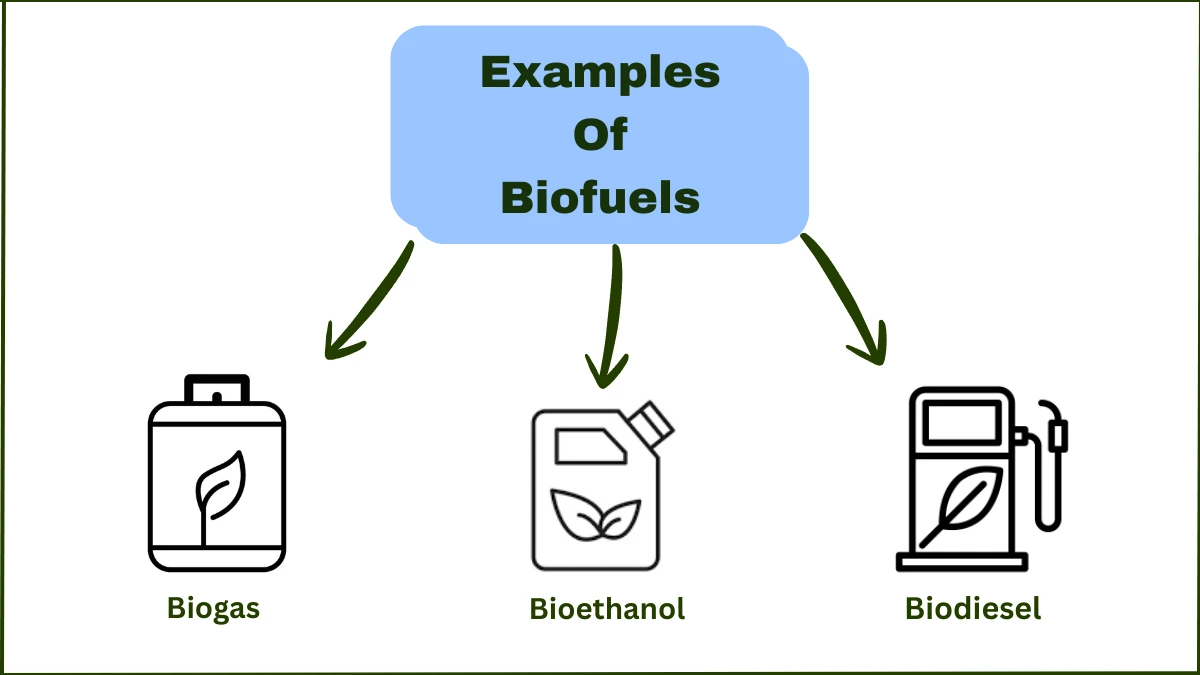
Examples of biofuels include bioethanol, biodiesel, biogas, biojet fuel, wood waste, cellulosic ethanol, biomethanol, charcoal, and agricultural residue fuels.
Biofuels are a type of energy. They come from biological materials. These materials are called biomass. Biomass includes plants as well as animal waste. Biofuels are different from fossil fuels such as coal and oil. Fossil fuels take millions of years to form on the Earth. In contrast, biofuels can be produced in a much shorter time.
Biofuels are important because they are renewable energy sources. This means they can be produced again from natural materials. They are also considered more environmentally friendly. In many cases, they produce less pollution than traditional fuels.
Examples of Biofuels
Below are some common examples of biofuels used in daily life and industry.
1. Bioethanol
Bioethanol is a liquid fuel made from plant materials that contain sugar or starch. It is one of the most common biofuel types used around the world. Crops like corn, sugarcane, and wheat are often used to produce it. In the production process, sugars in the plants are fermented by yeast. This fermentation produces ethanol, which is then purified to make fuel.
Bioethanol is mainly used as a fuel in vehicles. It is often mixed with gasoline to reduce pollution. Because it comes from plants, bioethanol is considered a renewable biofuel and an important bioenergy source.
2. Biodiesel
Biodiesel is a liquid fuel produced from natural oils and fats. These oils can come from vegetable sources like soybean, sunflower, palm, and canola. It can also be made from animal fats or used cooking oil. The oils go through a chemical process called transesterification. This process converts them into biodiesel that can be used in diesel engines.
Biodiesel can be used alone or mixed with petroleum diesel. Many countries use blends like B5 or B20 in vehicles and machinery. Biodiesel produces fewer pollutants compared to regular diesel. It is also biodegradable and safer for the environment. Because it is made from natural materials, it is an important renewable biofuel.
3. Biogas
Biogas is a gaseous fuel made from organic waste. It forms when microorganisms break down organic materials in the absence of oxygen. This process is called anaerobic digestion. Materials used to produce biogas include animal manure, food waste, sewage sludge, and crop residues.
The gas mainly contains methane and carbon dioxide. Methane is the part that burns and produces energy. Biogas is widely used for cooking, heating, and electricity generation. In some places, it is also cleaned and used as vehicle fuel. Biogas is a valuable bioenergy source because it turns waste into useful energy.
4. Biojet Fuel
Biojet fuel is a renewable fuel used in airplanes. It is produced from biological materials such as plant oils, algae, animal fats, or agricultural waste. These materials are processed and refined to create fuel that works in jet engines.
Biojet fuel can be blended with traditional aviation fuel. It helps reduce greenhouse gas emissions from air travel. Airlines and researchers are working to increase its use in the aviation industry. Because it is produced from renewable resources, biojet fuel is an important example of modern renewable biofuels.
5. Wood Waste
Wood waste is a simple and traditional type of solid biofuel. It includes leftover wood materials such as sawdust, wood chips, tree branches, and forest residues. These materials are often produced during wood processing or forestry activities.
Wood waste can be burned directly to produce heat and electricity. It is also used to make pellets and briquettes for fuel. Many power plants use wood waste as a source of biomass energy. Since it comes from plant material, it is considered a renewable biomass fuel.
6. Cellulosic Ethanol
Cellulosic ethanol is an advanced type of bioethanol made from plant fibers. These fibers are found in materials such as crop residues, grasses, wood, and agricultural waste. Unlike regular ethanol, it does not rely on food crops like corn or sugarcane.
The production process breaks down cellulose into simple sugars.
Microorganisms then ferment these sugars to produce ethanol. Cellulosic ethanol is considered a second-generation biofuel. It helps use waste materials and reduces competition with food production. Because of this, it is an important development in modern biofuel technology.
7. Biohydrogen
Biohydrogen is a clean fuel produced through biological processes. Microorganisms like bacteria and algae break down organic materials and release hydrogen gas. This hydrogen can then be collected and used as fuel.
When hydrogen burns, it mainly produces water. This means it does not release harmful pollutants. Biohydrogen can also be used in fuel cells to produce electricity. Scientists are studying this fuel as a future renewable bioenergy source.
8. Biomethanol
Biomethanol is a liquid fuel produced from biomass materials. Sources include wood, agricultural residues, and organic waste. These materials are first converted into a gas mixture called syngas. The gas is then processed to produce methanol.
Biomethanol can be used as fuel in vehicles or power plants. It is also used to produce chemicals and other fuels. Because it is derived from natural biomass, it is considered a renewable biofuel.
9. Charcoal
Charcoal is another example of a solid biofuel. It is produced by heating wood in a low-oxygen environment. This process removes water and other substances, leaving a carbon-rich fuel.
Charcoal burns hotter and cleaner than raw wood. It is widely used for cooking and heating in many parts of the world. It is also used in some industrial processes. Since it is produced from plant materials, charcoal is part of biomass fuels used for energy.
10. Agricultural Residue Fuels
Agricultural residues are leftover materials from farming. Examples include rice husks, corn stalks, wheat straw, and sugarcane bagasse. These materials are often considered waste after crops are harvested.
11. Renewable Diesel
Renewable diesel is also made from natural oils and fats, but it is processed in a different way than biodiesel. This process makes it very similar to regular diesel fuel. Because of this, it can be used in engines without any changes. It burns cleaner and performs well in vehicles. Renewable diesel is an important bioenergy source for modern transportation.
12. Sustainable Aviation Fuel (SAF)
Sustainable Aviation Fuel (SAF) is a type of fuel used in airplanes. It is made from renewable sources such as plant oils, waste materials, and algae. SAF is designed to work in aircraft engines like regular jet fuel. It helps reduce pollution from air travel. It is an important example of modern renewable biofuels used in the aviation industry.
FAQs
What are some examples of biofuels?
Some common examples of biofuels are bioethanol, biodiesel, biogas, biojet fuel, wood, and charcoal. These fuels are made from plants, waste, and other organic materials. They are widely used for transport, cooking, and energy production.
What are the three main biofuels?
The three main biofuels are bioethanol, biodiesel, and biogas. These are the most commonly used biofuel types around the world. They are used in vehicles, electricity generation, and daily energy needs.
Are biofuels renewable?
Yes, biofuels are renewable. They can be produced again from plants and organic materials in a short time.
What are solid biofuels?
Solid biofuels include wood, charcoal, and crop waste. They are burned to produce heat and energy.
What is the most popular biofuel?
Bioethanol is the most popular biofuel. It is widely used in cars by mixing it with petrol. Many countries use it to reduce pollution and improve fuel efficiency.