
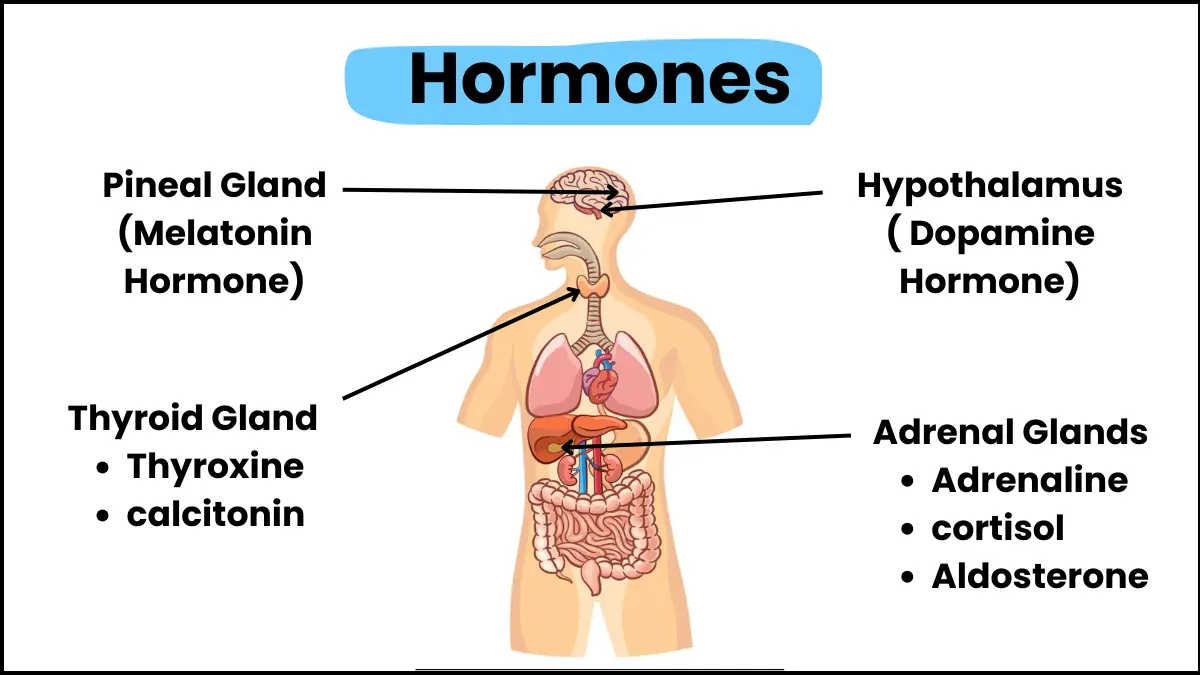
Examples of hormones include insulin, thyroxine, adrenaline, growth hormone, estrogen, progesterone, cortisol, and glucagon.
Hormones are chemical messengers. They are produced by glands and released into the blood. The blood carries them to the target organs. A target cell is a cell that has a matching receptor for a hormone. Hormones work more slowly than nerve signals, but their effect lasts longer. Hormones help control growth, metabolism, sleep, and reproduction.
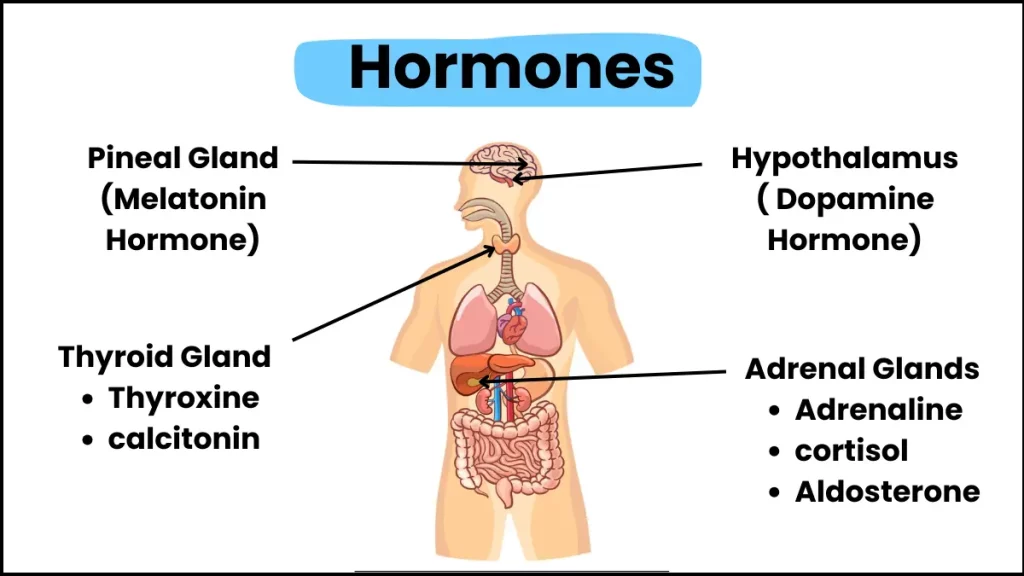
Examples Of Hormones
Below are some important examples of hormones found in the human body. Each one plays a key role in keeping the body balanced.
1. Dopamine
Dopamine acts as both a hormone and a neurotransmitter. It is produced in the brain and controls mood, motivation, and pleasure. Low dopamine levels are linked with conditions like Parkinson’s disease and depression. It may cause low motivation and movement problems. High dopamine levels can lead to abnormal behavior.
2. Thyroxine
Thyroxine is produced by the thyroid gland that is located in the neck. It controls the body’s metabolism. Metabolism means how fast the body uses energy from food. If thyroxine levels are high, the body works faster. Fast metabolism can lead to weight loss and rapid heartbeat. If thyroxine levels are low, the body works slowly. Slow metabolism can lead to weight gain and tiredness.
3. Adrenaline
Adrenaline is also known as epinephrine. It is produced by the adrenal glands, located above the kidneys. It prepares the body for emergency situations. This is known as the “fight or flight” response. When epinephrine is released it increases the heart rate and breathing. It gives quick energy to muscles. It helps a person react quickly during danger, stress, or excitement.
4. Growth Hormone (GH)
Growth hormone is produced by the pituitary gland( also called the master gland), which is located in the brain. It controls height and body development in children and teenagers. It helps bones grow longer and muscles develop. It also supports tissue repair and regulates metabolism.
Low production of growth hormone can lead to a condition called pituitary dwarfism. In this condition, a child has a short height but normal body proportions. When growth hormone is produced in excessive amounts, it leads to a condition called pituitary gigantism. In this condition, the person becomes unusually tall.
5. Estrogen
Estrogen is mainly produced in the ovaries in females. It is responsible for female reproductive development. It regulates the menstrual cycle. Low levels of estrogen can cause delayed puberty, irregular menstrual cycles, and weak bones.
In adults, it may lead to osteoporosis, which is a condition where bones become weak. When estrogen is produced in excess, it may cause early puberty, weight gain, and an increased risk of certain cancers such as breast cancer.
6. Testosterone
Testosterone is produced mainly in the testes in males. It controls male body features such as deep voice and facial hair. Low levels of testosterone can lead to delayed puberty, reduced muscle mass, low energy, and decreased fertility.
High levels of testosterone, especially due to artificial use or medical conditions, can cause aggressive behavior, acne, and abnormal growth of body hair. It plays a role in sperm production. It is also present in small amounts in females.
7. Cortisol
Cortisol is released by the adrenal glands. It helps the body respond to stress. It also controls metabolism and reduces inflammation. When cortisol is produced in low amounts, it causes a condition called Addison’s disease. People with this condition may feel weak and tired.
When cortisol is produced in excessive amounts, it leads to Cushing’s syndrome. This condition causes weight gain, especially around the face and abdomen, along with high blood pressure and weak muscles.
8. Melatonin
Melatonin is produced by the pineal gland in the brain. It controls sleep patterns. It helps the body know when it is time to sleep. It is released more at night. Low melatonin levels can lead to sleep disorders such as insomnia. A person may find it difficult to fall asleep. High levels of melatonin may cause excessive sleepiness and disrupt the normal sleep pattern.
9. Follicle-Stimulating Hormone (FSH)
FSH is produced by the pituitary gland and plays a key role in reproduction. In females, it stimulates the growth of ovarian follicles. In males, it helps in sperm production. If FSH levels are low, it can lead to poor development of eggs in females and low sperm production in males. This may lead to infertility.
10. Luteinizing Hormone (LH)
LH is also produced by the pituitary gland and works closely with FSH. In females, it triggers ovulation, which is the release of an egg from the ovary. In males, it stimulates the production of testosterone.
Low LH levels can prevent ovulation in females and reduce testosterone production in males, leading to fertility problems. High LH levels may indicate reproductive disorders such as polycystic ovary syndrome (PCOS) in females.
11. Prolactin Hormone
Prolactin is produced by the pituitary gland and is responsible for milk production in females after childbirth. Low levels of prolactin may lead to difficulty in producing milk after delivery. High levels cause a condition called hyperprolactinemia. This can lead to unwanted milk production and infertility in females.
12. Thyroid-Stimulating Hormone (TSH)
TSH is produced by the pituitary gland and controls the activity of the thyroid gland. It stimulates the thyroid to produce hormones like thyroxine. Low TSH levels can lead to reduced thyroid activity, causing hypothyroidism. High TSH levels usually indicate that the thyroid is underactive, and the body is trying to stimulate it more.
13. Adrenocorticotropic Hormone (ACTH)
ACTH is produced by the pituitary gland and controls the adrenal glands. It stimulates the adrenal glands to produce cortisol. Low ACTH levels can reduce cortisol production, leading to symptoms similar to Addison’s disease. High ACTH levels can cause excess cortisol production, leading to Cushing’s disease.
14. Aldosterone
Aldosterone is produced by the adrenal glands and controls salt and water balance in the body. It also helps regulate blood pressure. When aldosterone is low, it can cause low blood pressure and dehydration. When aldosterone is high, it leads to hyperaldosteronism. This condition causes high blood pressure.
15. Somatostatin
Somatostatin is produced in several parts of the body, including the brain and pancreas. It works as an inhibitory hormone. Low somatostatin levels may lead to increased hormone activity. High levels can suppress growth hormones too much and affect digestion and metabolism.
16. Insulin
Insulin is produced by the pancreas. The pancreas is a gland located behind the stomach. Its main function is to control blood sugar levels. After eating, food is broken down into glucose. Insulin helps body cells absorb glucose and use it as energy.
If insulin is low or not working properly, glucose stays in the blood. This leads to high blood sugar, known as diabetes. Insulin keeps energy levels stable and prevents damage to organs.
17. Calcitonin
Calcitonin is produced by the thyroid gland and helps lower blood calcium levels. It works opposite to parathyroid hormone by storing calcium in bones. Low calcitonin levels usually do not cause major problems. High levels may be linked to certain thyroid disorders.
18. Oxytocin
Oxytocin is produced in the brain and released by the pituitary gland. It plays a role in childbirth. It helps in milk release during breastfeeding. It is also linked to bonding and trust. It is sometimes called the “love hormone” because it strengthens emotional connections.
Low levels of oxytocin may affect social bonding and emotional connections. Excess oxytocin is rare, but it may lead to overly strong emotional responses or affect normal hormone balance.
19. Glucagon
Glucagon is also produced by the pancreas. It works opposite to insulin. It raises blood sugar levels by signaling the liver to release stored glucose. If glucagon levels are too low, the body may not be able to raise blood sugar properly during fasting. This can lead to hypoglycemia. If glucagon is produced in excess, it can cause high blood sugar levels, similar to diabetes.
20. Progesterone
Progesterone is produced in the ovaries and prepares the uterus for pregnancy. It works closely with estrogen. Low progesterone levels can lead to irregular menstrual cycles and difficulty in maintaining pregnancy. High levels of progesterone may cause tiredness, mood changes, and bloating.
21. ADH
ADH is produced in the brain and acts on the kidneys to control water balance. When ADH is low, the body loses too much water in urine. This condition is called diabetes insipidus. It causes extreme thirst and dehydration. When ADH is high, it leads to SIADH (Syndrome of Inappropriate ADH Secretion). This causes water retention and low salt levels in the blood, which can be harmful.
FAQs
What are hormones?
Hormones are chemical messengers made by glands. They travel in the blood and control body functions like growth, mood, and metabolism.
What are the main examples of hormones?
Some common examples include insulin, cortisol, estrogen, testosterone, adrenaline, thyroxine, melatonin, and growth hormone.
Are hormones only found in humans?
No, hormones are found in animals and even plants. They help control growth and other life processes.
What is the difference between hormones and enzymes?
Hormones send messages in the body, while enzymes speed up chemical reactions.
Which hormone controls blood sugar levels?
Insulin lowers blood sugar, while glucagon raises it. Both work together to keep sugar levels balanced.