
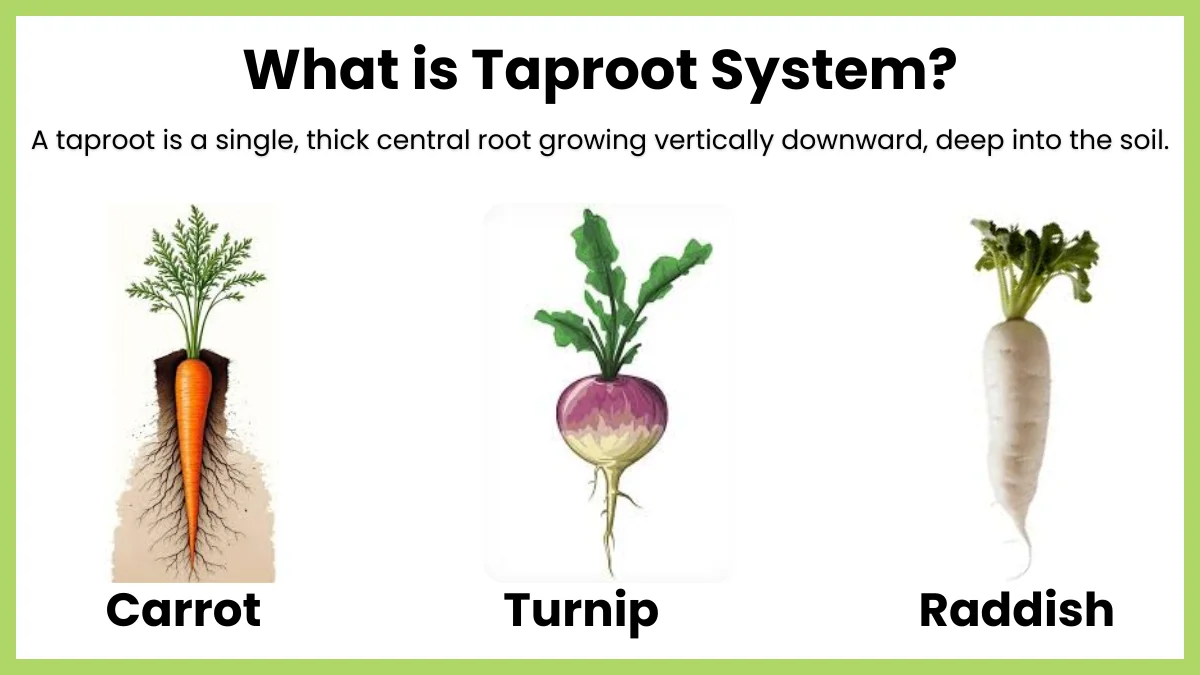
Taproot is the main, central large root that grows vertically downward from the plant. It develops from the radicle of the seed during germination. The taproot gives rise to smaller lateral roots, called secondary and tertiary roots. Taproot is straight, thick, and usually tapers at the bottom.
Taproot systems are primarily found in dicotyledonous plants and gymnosperms. They are structured for deep anchorage and to reach water located in the deep soil.
Carrots, radishes, beetroots, turnips, oak trees, pine trees, mango trees, neem trees, pecan trees, cottonwood trees, and sunflower are some common examples of taproot plants.
Characteristics of Taproot
Here are some characteristics of a taproot system:
- Origin: The taproot arises from the radicle of the seed. This is the first root to emerge when a seed germinates.
- Structure: Taproot is straight and thick in shape. It usually tapers at the bottom. The taproot gives rise to secondary lateral roots, which further give rise to tertiary lateral roots.
- Depth: Taproots grow deep into the soil. They penetrate downward rather than spreading horizontally. Some desert plants have taproots over 75 feet long.
- Soil Preference: Taproots grow well in deep, soft, and mineral-enriched soil. Hard or rocky soil can restrict their growth.
Functions of Taproot
Taproots perform several important functions that help plants survive and grow. Here are the main functions of taproot:
- Absorption: The taproot absorbs water and nutrients from the soil. Lateral roots increase the surface area for more absorption. Root hairs at the tips further maximize nutrient uptake.
- Anchorage: The taproot anchors the plant firmly into the ground. This provides stability and helps the plant stand upright. It allows plants to withstand strong winds.
- Storage: Many taproots store food reserves. They hold starch and sugars for the plant to use during dormancy. This phenomenon is why many taproots are eaten as vegetables.
- Deep Water Access: Taproots can reach deep water tables. This helps plants survive in dry environments where surface water is scarce.
Shapes of Taproot
Taproots come in different shapes based on how they store food. Here are the four main types of taproots on the basis of their shapes:
- Conical Root: A conical root is broad at the top and slowly tapers toward the bottom. It looks like a cone. Example: Carrot.
- Fusiform Root: A fusiform root is widest in the middle and tapers at both ends. It looks like a spindle. Example: Radish.
- Napiform Root: This type of taproot is very broad at the top and suddenly tapers like a tail at the bottom. It looks like a top. Example: Turnip and beetroot.
- Tuberous Root: A tuberous root is thick and fleshy with no regular shape. It is used heavily for storage. Example: Some variations of carrots and beets.
Examples of Taproot Plants
Taproots are found in a wide variety of plants. These include vegetables, trees, herbs, and flowers. Here are some examples of taproot systems:
Vegetables with Taproots
Vegetables with taproots include the following:
1. Carrot (Daucus carota):
Carrot has a conical taproot. It is the main storage organ and is eaten as a vegetable. It stores sugars and is rich in vitamin A.
2. Radish (Raphanus sativus):
Radish has a fusiform taproot. It is eaten raw in salads or cooked as a vegetable. It has a sharp, peppery taste.
3. Beetroot (Beta vulgaris):
Beetroot has a napiform taproot. It is deep red and rich in nutrients. It is eaten boiled, pickled, or raw. Sugar beet is a variety cultivated for high sugar content.
4. Turnip (Brassica rapa):
Turnip has a napiform taproot. It is white or purple on top and white at the bottom. It is eaten as a root vegetable in many cultures.
5. Parsnip (Pastinaca sativa):
Parsnip looks similar to a carrot but is white. It has a long taproot that becomes sweet after frost. It is eaten roasted or boiled.
6. Parsley (Petroselinum crispum):
Parsley has a taproot. While leaves are used as an herb, the root is also edible in some varieties. It is used in soups and stews.
7. Sugar Beet (Beta vulgaris):
Sugar beet is cultivated for high sugar content in its taproot. It provides about 20 percent of the world’s sugar production.
Herbs and Weeds with Taproots
Examples of herbs and weeds with taproots are:
1. Dandelion (Taraxacum):
Dandelion has a deep, tough taproot. It makes the plant hard to pull out of the ground. The root is used in herbal medicine and as a coffee substitute.
2. Burdock (Arctium):
Burdock has a long, deep taproot. It is eaten as a vegetable in Asian cuisine. It is also used in traditional medicine.
3. Asafoetida (Ferula species):
Asafoetida is an Indian condiment (sauces, spices, and pickles). It is extracted from the latex taproots of Ferula plants. It is used in cooking and medicine.
Trees with Taproots
Examples of trees with taproots include the following:
1. Oak Tree (Quercus):
Oak trees have large, woody taproots. They grow deep into the soil for anchorage. This helps the tall tree stand firm against wind.
2. Pine Tree (Pinus):
Pines are gymnosperms with taproot systems. The taproot provides deep anchorage and accesses water far below the surface.
3. Mango Tree (Mangifera indica):
Mango trees have a strong taproot system. It anchors the large tree and supports its heavy fruit load.
4. Neem Tree (Azadirachta indica):
Neem has a deep taproot. It helps the tree survive in dry conditions. The root system also stores nutrients.
5. Pecan Tree (Carya illinoinensis):
Pecan trees have taproots. They grow deep to access water and anchor the large tree. They produce nuts that are commercially important.
6. Cottonwood Tree (Populus deltoides):
Cottonwood trees have deep taproots. They often grow near water and use their taproots to reach the water table.
Flowers with Taproots
Some flowers having taproots include the following:
1. Sunflower (Helianthus annuus):
Sunflowers have taproot systems. The deep root helps the tall flower stand upright. It also accesses nutrients from deep soil.
2. Poppy (Papaver):
Poppies have taproots. The root stores nutrients for the plant. Some poppy roots are used medicinally.
Advantages of Taproot System
A taproot system provides several benefits to a plant. Some advantages of taproot systems in plants are the following:
- Drought Tolerance: Taproots reach deep water tables. Therefore, plants can survive when surface soil is dry.
- Strong Anchorage: The deep root holds the plant firmly. It prevents the plants from falling in strong winds.
- Nutrient Storage: Many taproots store food. This helps plants survive winter or dry seasons.
- Soil Penetration: Taproots break up deep soil layers. This improves soil structure over time.
Disadvantages of Taproot System
Some disadvantages of taproot systems in plants are the following:
- Transplant Sensitivity: If the taproot is cut during transplanting, the plant often dies. It cannot regrow the main root easily.
- Soil Requirement: Taproots need deep, soft, nutrient-rich soil. They struggle in rocky or shallow soil.
- Slow Establishment: Taproots take time to grow deep. Young plants may be vulnerable until the root is established.
Frequently Asked Questions
What are five examples of plants with taproots?
Carrots, radishes, beetroots, turnips, and oak trees are five common examples of taproot plants.
What is the difference between a taproot and a fibrous root?
Taproot has one large main root growing deep. Fibrous roots have many thin roots spreading near the surface. Taproot is found in dicots, which are flowering plants that have two seed leaves, like carrots. Fibrous root, which consists of many thin roots spreading near the surface, is found in monocots like grass.
What are the three types of taproot shapes?
The three types of taproot shapes are conical (carrot), fusiform (radish), and napiform (turnip and beetroot).
Do trees have taproots?
Yes, many trees like oak, pine, mango, and neem have taproot systems. They help anchor the tall trees and access deep water.
Is a potato a taproot?
No, a potato is not a taproot. A potato is a modified stem called a tuber. Sweet potato is a modified root but not a true taproot.
What is the function of a taproot?
Taproots absorb water and nutrients from deep soil. They anchor the plant firmly. They also store food for the plant.
Which plants have taproots besides vegetables?
Dandelion, sunflower, oak trees, pine trees, and asafoetida plants have taproots. Many dicot plants and gymnosperms have taproot systems.