
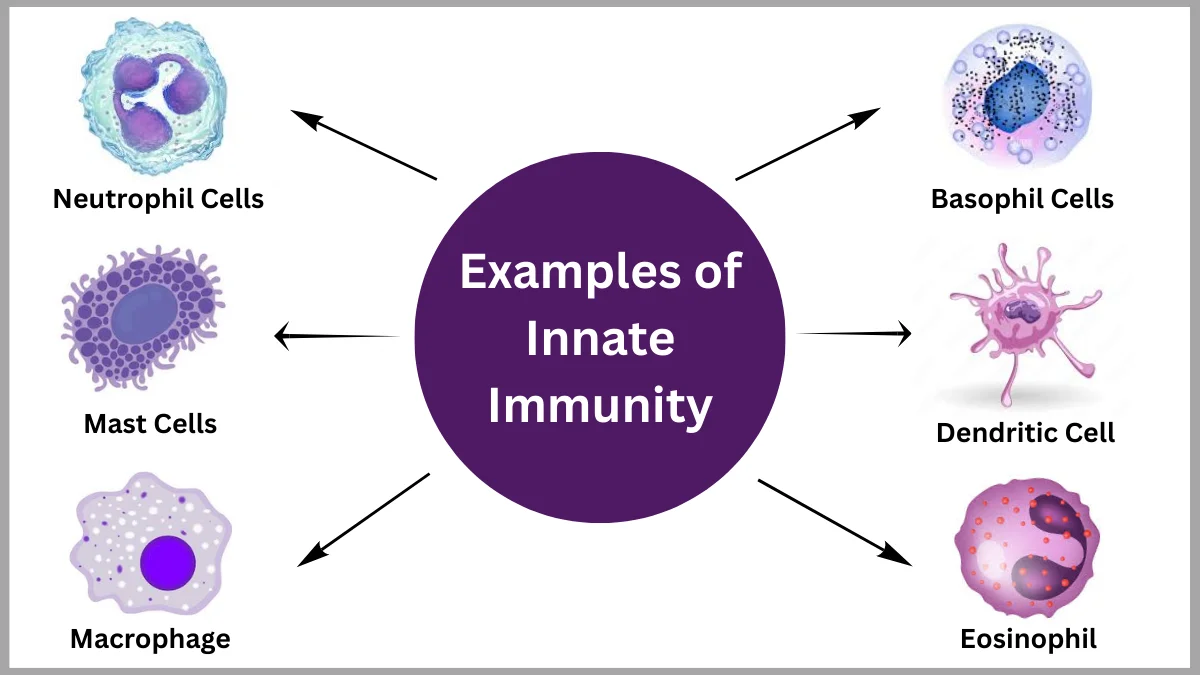
Some common examples of innate immunity include skin, mucous membranes, cilia, tears, saliva, stomach acid, urine, skin oils, earwax, cough reflex, sneezing, neutrophils, macrophages, natural killer cells, dendritic cells, basophils, eosinophils, interferons, fever, inflammation, and normal microbiota.
What is Innate Immunity?
Innate immunity is the body’s first line of defense against germs. Innate immunity is present from birth. It works immediately or within hours of a pathogen entering the body. This type of immunity is non-specific. That means it fights all germs in the same way, not targeting one specific germ.
Innate immunity helps us by providing natural resistance through components like salivary enzymes, natural killer cells, intact skin, and neutrophils. These produce an initial response against infections before we are ever exposed to a specific pathogen.
Without innate immunity, we would get sick from every germ we meet. Adaptive immunity takes days to respond. Innate immunity fills that gap. It also helps start the adaptive response. Dendritic cells present fragments of pathogens to T cells and B cells. This process informs the adaptive system what to attack.
30 Examples of Innate Immunity
Here are some examples of innate immunity.
Physical and Mechanical Barriers
In our body, physical and mechanical barriers include the following:
1. Skin
Skin is the body’s largest organ. Skin acts as a physical barrier to pathogen entry. The outer skin layer is tough and dry. Germs cannot easily pass through it. Skin also sheds dead cells regularly, which removes any microbes stuck to it.
2. Mucous Membranes
Mucous membranes line the respiratory tract and gastrointestinal tract. They secrete sticky mucus that traps microorganisms. This prevents germs from reaching deeper tissues.
3. Cilia
Cilia are tiny hair-like structures in the lungs and airways. They move back and forth in waves. This motion pushes mucus and trapped pathogens up and out of the airways. People cough or swallow them.
4. Tears
Tears flush particles from the eye. They also contain an enzyme called lysozyme that kills bacteria by breaking down their cell walls.
5. Saliva
Saliva in the mouth contains enzymes that break down bacterial cell walls. It also washes germs from teeth and gums into the stomach, where acid kills them.
6. Stomach Acid
The stomach produces hydrochloric acid. This creates a very acidic environment with a pH around 2. Most germs that enter with food are killed here before they can infect the body.
7. Urine
Urine flow flushes bacteria from the urinary system. It prevents germs from traveling up into the bladder and kidneys.
8. Skin Oils
Glands in the skin produce sebum, an oily substance. Sebum contains fatty acids that inhibit bacterial growth. It also keeps skin flexible and prevents cracking.
9. Earwax
Earwax is also called cerumen. It traps dust, debris, and pathogens in the ear canal. It also creates an acidic environment that stops bacterial and fungal growth.
10. Cough Reflex and Sneezing
Coughing reflex and sneezing are forceful expulsions of air. They remove irritants and pathogens from the respiratory tract. Cough clears the lower airways. Sneezing clears the upper airways and nose.
11. Desquamation
Desquamation is the shedding of skin cells. Humans lose millions of skin cells every day. Any microbes attached to these cells are shed along with them. This constant renewal removes germs from the skin surface.
Chemical and Internal Defenses
Here are some examples of chemical and internal defenses in our body:
12. Lysozyme
Lysozyme is an enzyme found in tears, saliva, and mucus. It breaks down the cell walls of bacteria, causing them to burst.
13. Interferons
Interferons are proteins released by virus-infected cells. They warn nearby healthy cells. The healthy cells then prepare defenses against the virus. Interferons create an antiviral state in surrounding tissues.
14. Complement System
Complement system is a group of about 30 proteins in the blood. They work together to destroy bacteria. Some complement proteins punch holes in bacterial cell walls. Others attract phagocytes to the infection site. Some coat bacteria to make them easier for phagocytes to eat.
15. Fever
When pathogens invade the body, the body may raise its temperature. Higher temperatures slow down bacterial growth. Fever also speeds up immune cell activity. It creates an environment that is less friendly to germs.
16. Inflammation
When tissues are injured or infected, they become red, hot, swollen, and painful. This is inflammation. It brings more blood and immune cells to the area. The heat can kill some germs. The swelling walls off the infection. It is a sign that the immune system is working.
17. Normal Microbiota
Normal microbiota is also called microflora. These are harmless bacteria that live on and in our bodies. They compete with pathogens for nutrients and space. By taking up space, they leave no room for harmful germs. Some also produce substances that inhibit pathogens.
Cellular Responses
Cellular responses involve immune cells that detect and destroy pathogens to protect the body from infection. These immune cells include:
18. Neutrophils
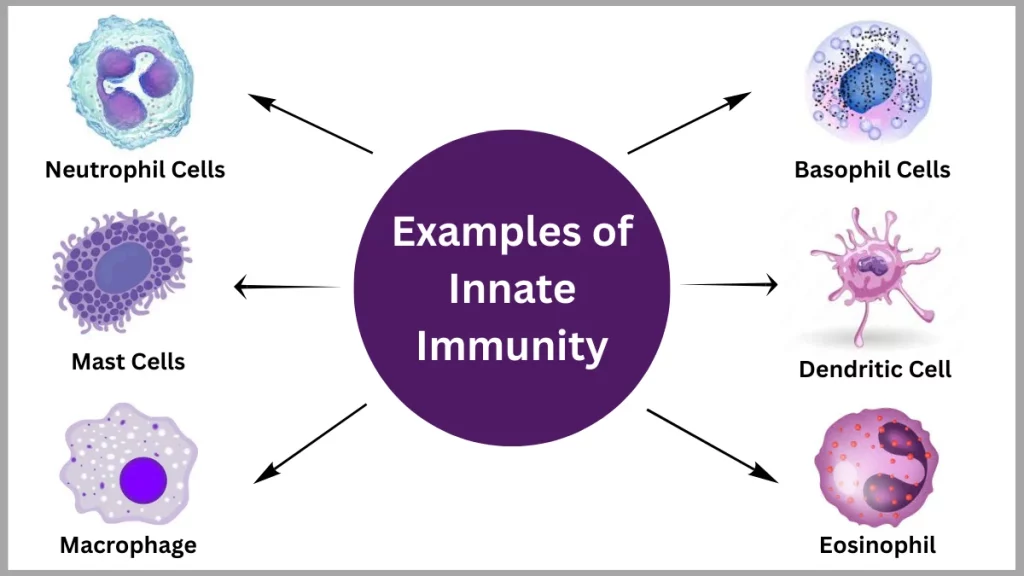
Neutrophils are the most common type of white blood cell. They are first responders to infection. They rush to the site and engulf bacteria in a process called phagocytosis. They contain toxic granules that kill the germs they eat.
19. Macrophages
Macrophages are large phagocytic cells. Their name means big eaters. They consume pathogens and dead cell debris. They also release signals that recruit other immune cells to the area. Some macrophages stay in tissues and act as guards.
20. Natural Killer Cells
Natural killer cells are lymphocytes that do not target specific germs. They destroy virus-infected cells and tumor cells. They recognize when a cell is stressed or abnormal and kill it before the infection spreads.
21. Dendritic Cells
Dendritic cells are located in tissues that are common entry points for germs, like skin and mucous membranes. They sense infection and capture pieces of pathogens. Then they travel to lymph nodes to show these pieces to other immune cells. This starts the adaptive immune response.
22. Mast Cells
Mast cells are important for wound healing and defense. They release histamine, which causes inflammation. Histamine makes blood vessels leaky so immune cells can reach the infection site. Mast cells also help fight parasites.
23. Basophils
Basophils are white blood cells that attack on multicellular parasites. Like mast cells, they release histamine. They are involved in allergic reactions as well.
24. Eosinophils
Eosinophils contain highly toxic proteins in their granules. They release these proteins to kill parasites that are too large for phagocytes to eat. Eosinophils are especially important against worms and other parasites.
25. Phagocytes
“Phagocyte” is a general term for cells that eat pathogens. It includes neutrophils, macrophages, and dendritic cells. They circulate through the body looking for foreign substances. When they find them, they engulf and destroy them.
Other Examples of Innate Immunity
Here are some other examples of innate immunity:
26. Vomiting and Diarrhea
Vomiting and diarrhea expel harmful substances from the digestive tract. They are unpleasant but help remove germs quickly.
27. Blood Clotting
When skin is cut, clotting prevents blood loss. Blood clotting also seals the wound to keep germs from entering.
28. Antimicrobial Peptides
Antimicrobial peptides are small proteins in skin and mucous membranes that kill bacteria directly.
29. Lactoferrin
Lactoferrin is a protein found in milk, saliva, and tears. It binds iron. Bacteria need iron to grow. By stealing iron, lactoferrin stops bacterial growth.
30. pH of Skin
Healthy skin is slightly acidic, around pH 5. This inhibits many bacteria and fungi that prefer neutral conditions.
Frequently Asked Questions
What are examples of physical barriers in innate immunity?
Skin, mucous membranes, and cilia are physical barriers. They block germs from entering the body or push them out.
What are chemical barriers in innate immunity?
Stomach acid, tears, saliva, and skin oils are chemical barriers. They kill germs or stop them from growing.
Which cells are involved in innate immunity?
Neutrophils, macrophages, natural killer cells, dendritic cells, mast cells, basophils, and eosinophils are all innate immune cells.
Is fever part of innate immunity?
Yes. Fever is a physiological response that helps fight infection. High temperature slows germ growth and helps immune cells work better.
What is the difference between innate and adaptive immunity?
Innate immunity is present from birth and works immediately against all germs. Adaptive immunity develops after exposure to specific germs and targets them precisely. Innate is fast and general. Adaptive is slow but specific.
How do tears protect against infection?
Tears wash germs from the eyes. They also contain lysozyme, an enzyme that kills bacteria by breaking their cell walls.
What are phagocytes?
Phagocytes are cells that eat pathogens. They surround germs and digest them. Neutrophils and macrophages are the main phagocytes.
What is the complement system?
The complement system is a group of proteins in blood that help destroy bacteria. They punch holes in germs or mark them for phagocytes to eat.
Can innate immunity remember past infections?
No. Only adaptive immunity has memory. Innate immunity responds the same way every time, no matter how many times it comes in contact with a germ.