
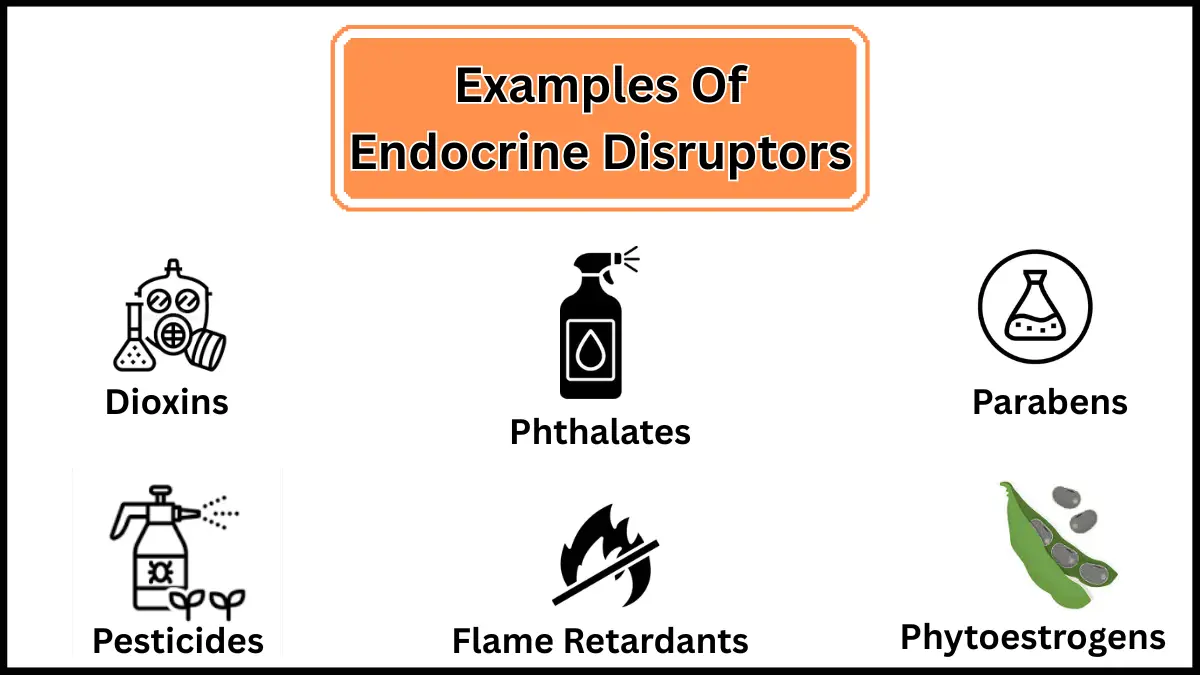
Examples of Endocrine Disruptors include bisphenol A, phthalates, dioxins, PCBs, endosulfan, atrazine, lead, mercury, estrogenic drugs, and triclosan. Endocrine disruptors are chemicals that interfere with hormones in the body.
Hormones control growth, development, metabolism, and reproduction. Endocrine disruptors can mimic, block, or change natural hormones, causing health problems in humans and animals. These chemicals are present in many everyday items, including plastics, cosmetics, pesticides, and even some naturally occurring foods.
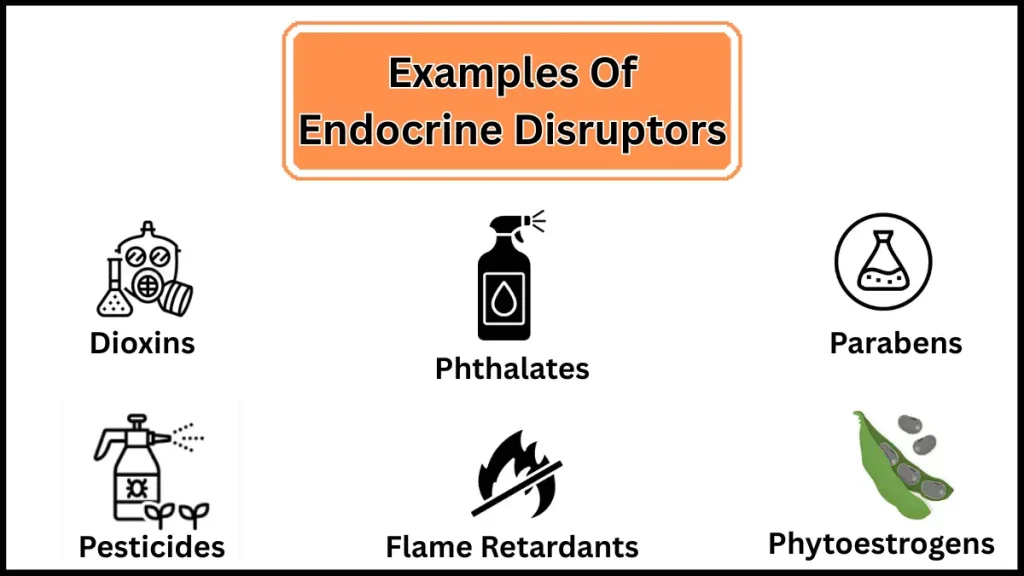
Examples of Endocrine Disruptors
Some common examples of Endocrine Disruptors are listed below:
1. Bisphenol A (BPA)
Bisphenol A, or BPA, is a chemical used in plastic bottles, canned food linings, and receipts. It mimics the hormone estrogen and interferes with the body’s natural hormone signals. Drinking hot beverages from plastic cups containing BPA can increase exposure.
Impact: BPA can affect reproductive organs, delay development in children, and increase the risk of obesity, diabetes, and heart disease.
2. Phthalates
Phthalates are chemicals used to make plastics soft and flexible. They are also present in shampoos, toys, perfumes, and other cosmetics. Phthalates interfere with testosterone and other reproductive hormones. Children playing with soft plastic toys or using products with perfumes may get exposed.
Impact: Phthalates can cause early puberty in girls, reduce fertility in boys, and affect the growth and development of children.
3. Polychlorinated Biphenyls (PCBs)
PCBs were used in electrical equipment, paints, and industrial products, and still exist in the environment. They affect thyroid hormones and disrupt brain development. People may come in contact with PCBs by eating fish from polluted rivers or living near contaminated industrial areas.
Impact: Exposure to PCBs can lead to learning difficulties, memory problems, and a weak immune system.
4. Dioxins
Dioxins are chemicals released during waste burning, industrial processes, and some food production. They interfere with sex hormones and the immune system. Dioxin can enter the body through contaminated meat, dairy products, or exposure to polluted air.
Impact: Exposure to dioxins can cause reproductive problems, developmental delays, and increase the risk of cancer.
5. DDT (Dichlorodiphenyltrichloroethane)
DDT is an insecticide that was widely used in the past; its residues remain in some soils and water. It mimics estrogen and interferes with reproductive hormones. Communities near old agricultural fields or areas where DDT was heavily sprayed are still at risk.
Impact: Exposure to DDT can reduce fertility, harm wildlife, and cause birth defects.
6. Atrazine
Atrazine is a herbicide used on crops to control weeds. It disrupts reproductive hormones. Drinking water contaminated with atrazine in farming areas is a common source of exposure.
Impact: Atrazine can cause birth defects, developmental problems, and abnormalities in amphibians and aquatic animals.
7. Endosulfan
Endosulfan is a pesticide banned in many countries, but it still exists in the environment. It affects sex hormones and reproduction. People who live near farms or regions where it was heavily used may still face the risk of exposure.
Impact: Exposure to endosulfan can reduce fertility, harm child development, and affect wildlife reproduction.
8. Flame Retardants (PBDEs)
Flame retardants such as PBDEs are chemicals added to furniture, electronics, mattresses, and carpets to reduce the risk of fire. These chemicals can mix with indoor dust and enter the body through breathing or swallowing. PBDEs interfere with thyroid hormones. Children living in homes with treated furniture may get exposed.
Impact: PBDEs can cause learning difficulties, attention problems, hormonal imbalance, and developmental delays in children.
9. Parabens
Parabens are preservatives used in shampoos, lotions, creams, makeup, and other personal care products. They can mimic estrogen, a hormone responsible for reproductive functions. Regular use of cosmetic products can increase exposure through the skin.
Impact: Parabens may disturb hormone balance, affect reproductive health, and possibly increase the risk of breast-related problems.
10. Arsenic
Arsenic is a toxic heavy metal found naturally in soil and groundwater. In some areas, drinking water contains high levels of arsenic. It interferes with thyroid hormones and insulin regulation in the body.
Impact: Long-term exposure can increase the risk of diabetes, reproductive problems, skin disorders, and certain cancers.
11. Lead
Lead is a heavy metal present in old paints, water pipes, and batteries. It interferes with thyroid and reproductive hormones. Children living in old houses with peeling paint are at high risk.
Impact: Exposure can cause brain development problems in children, learning difficulties, and behavioral issues.
12. Mercury
Mercury is found in contaminated fish, industrial emissions, and some dental fillings. It interferes with thyroid hormones and the nervous system. Eating large amounts of tuna or swordfish from polluted waters increases risk.
Impact: Mercury exposure can cause neurological problems, memory loss, and developmental delays in children.
13. Estrogenic Drugs
Estrogenic drugs include hormones used in oral contraceptives and hormone replacement therapy. They mimic natural estrogen and interfere with normal hormone balance. Residues of these drugs can enter water systems, affecting aquatic life.
Impact: Exposure to estrogenic drugs can affect fertility, reproductive health, and hormonal cycles in humans.
14. Phytoestrogens (Plant Compounds)
Phytoestrogens are natural chemicals found in soy products, flaxseeds, and legumes. They mildly mimic estrogen. Excessive intake of soy milk or soy supplements may influence hormone levels.
Impact: Phytoestrogens can affect hormone balance if consumed in large amounts.
15. Perfluorinated Chemicals (PFAS / PFCs)
PFAS are chemicals used in non-stick cookware, waterproof clothing, and fast-food packaging. They disrupt thyroid and reproductive hormones. Regular use of non-stick pans or fast-food wrappers containing PFAS increases the risk of exposure.
Impact: Exposure to these chemicals can increase the risk of cancer, affect the immune system, and harm reproductive health.
16. Triclosan
Triclosan is found in antibacterial soaps, toothpaste, and some cleaning products. It interferes with thyroid hormones. Daily use of antibacterial products containing triclosan can contribute to hormonal disruption over time.
Impact: Exposure to triclosan can affect growth, metabolism, and immune system function.
Frequently Asked Questions
What are endocrine disruptors?
Endocrine disruptors are chemicals that interfere with the body’s hormone system. They can mimic, block, or change natural hormones and disturb normal body functions.
How do endocrine disruptors affect the body?
They confuse the body’s hormone signals. This can affect growth, reproduction, metabolism, brain development, and the immune system.
What are common examples of endocrine disruptors?
Common examples include BPA, phthalates, DDT, atrazine, endosulfan, lead, mercury, PFAS, triclosan, and some estrogenic drugs.
Where are endocrine disruptors commonly found?
They are found in plastics, pesticides, cosmetics, canned food linings, contaminated water, industrial waste, and some personal care products.
Can endocrine disruptors cause infertility?
Yes. Many endocrine disruptors affect reproductive hormones like estrogen and testosterone. This can reduce fertility in both men and women.