
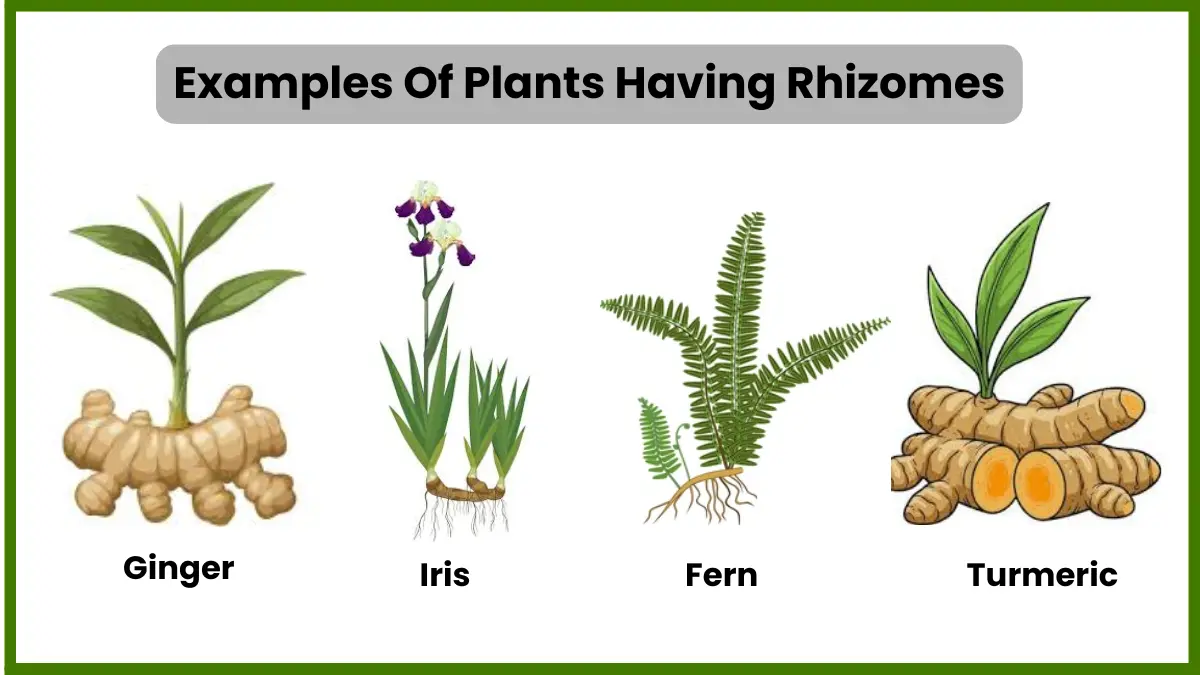
Examples of plants having rhizomes include ginger, turmeric, lotus, bamboo, iris, galangal, wasabi, snake plant, asparagus, rhubarb, alstroemeria, many ferns, Bermuda grass, poison oak, and Chinese lantern.
A rhizome is an underground stem that grows sideways. A rhizome is not a root. It has nodes and internodes just like stems that grow above ground. New shoots grow upward from these nodes to become new plants, while roots grow downward into the soil. Rhizomes store food and nutrients, helping the plant survive during winter or harsh conditions.
Examples Of Plants Having Rhizomes
Below is a detailed list of common plants that grow from rhizomes.
1. Ginger (Zingiber officinale)
Ginger is one of the best examples of a rhizome plant. Its rhizomes are thick and aromatic. The part we use in cooking and tea is the rhizome itself. Ginger grows horizontally underground. Ginger helps improve digestion, reduce nausea, and lower inflammation.
2. Turmeric (Curcuma longa)
Turmeric produces bright yellow rhizomes that are used as a spice, natural food coloring, and traditional medicine. Turmeric contains curcumin, a compound known for its anti-inflammatory and antioxidant properties. Turmeric is commonly used in curries, drinks, and herbal remedies.
3. Galangal (Alpinia galanga)
Galangal is a rhizomatous plant used in South Asian cooking and herbal medicine. Its underground stems are spicy and aromatic, supporting digestion, relieving nausea, and boosting immunity. The rhizomes also allow the plant to reproduce vegetatively and spread easily underground.
4. Lotus (Nelumbo nucifera)
Lotus grows in water, and its thick rhizomes spread horizontally beneath the soil in ponds. Lotus rhizomes are edible and nutritious. People use them in soups, stir-fries, snacks, and traditional dishes. These rhizomes store energy and help the plant survive changes in water levels.
5. Wasabi (Wasabia japonica)
Wasabi (Eutrema japonicum) grows from underground rhizomes and is famous for the green paste served with sushi. Real wasabi is difficult to grow because it needs cool temperatures and shade. It naturally grows in cool, shaded mountain stream areas in Japan. The rhizomes contain pungent compounds with natural antibacterial properties.
6. Asparagus (Asparagus officinalis)
Asparagus grows from underground rhizomes that produce fresh shoots in spring. These rhizomes store nutrients, allowing the plant to live for many years. The young shoots are edible and rich in vitamins, minerals, and antioxidants. The rhizomes help the plant survive cold conditions.
7. Rhubarb (Rheum rhabarbarum)
Rhubarb has thick underground rhizomes from which edible stalks grow. These rhizomes store nutrients and allow the plant to survive winter and regrow each season. The edible part is the stalk, which is often used in desserts. Its leaves contain toxic compounds and should not be consumed.
8. Iris (Iris species)
Iris plants are famous for growing from thick rhizomes. There are 300 species of iris, and they grow all over the world in meadows, deserts, and mountains. Iris rhizomes contain toxic compounds that may cause nausea or skin irritation if handled carelessly.
9. Lily of the Valley (Convallaria majalis)
Lily of the Valley grows from slender, branched rhizomes. This plant forms colonies as it spreads underground. The plant is highly ornamental, producing small, fragrant white flowers. The rhizomes of this plant contain chemical compounds used in traditional medicine, but the plant is toxic if eaten.
10. Canna Lilies (Canna indica)
Canna plants grow from starchy rhizomes. These rhizomes store nutrients and help the plant survive dry conditions. Gardeners grow cannas for their bright ornamental flowers. In some regions, people eat the rhizomes.
11. Alstroemeria (Alstroemeria spp.)
Alstroemeria is also known as Peruvian lilies. Alstroemeria grows from underground rhizomes and tuber-like structures that store nutrients. Gardeners plant it for decoration and cut flowers. These rhizomes help the plant survive unfavorable weather and regrow each year.
12. Snake Plant (Sansevieria trifasciata)
Snake plants grow from thick, underground rhizomes that store water and nutrients. These rhizomes help the plant to survive in dry conditions. People grow snake plants indoors because they require little care and help improve air quality.
13. Cast Iron Plant (Aspidistra elatior)
The cast-iron plant gets its name because it is almost impossible to kill. This plant grows from creeping rhizomes that spread underground. The rhizomes store everything the plant needs to keep growing through tough conditions.
14. Ferns (Various species)
Many ferns grow from creeping rhizomes that spread horizontally. These rhizomes store water and nutrients to support new fronds. People grow many fern species as decorative plants, and some types, like fiddlehead ferns, are edible.
15. Bamboo (Bambusoideae)
Bamboo spreads through underground rhizomes that grow quickly. These rhizomes send up new shoots at different places. The rhizomes store nutrients and allow bamboo to cover large areas. People use bamboo for construction, making furniture, paper, and decorations.
16. Bermuda Grass (Cynodon dactylon)
Bermuda grass spreads through underground rhizomes. These rhizomes help the grass survive dry conditions. People use this grass for lawns, playgrounds, and sports fields.
17. Johnson Grass (Sorghum halepense)
Johnson grass has extensive underground rhizomes, allowing it to spread aggressively. This grass is considered a weed in many areas.
18. Poison Oak (Toxicodendron diversilobum)
Poison oak spreads through underground rhizomes. These rhizomes help the plant grow back easily. This plant produces an oil called urushiol that causes skin irritation, so it should be avoided.
19. Chinese Lantern (Physalis alkekengi)
This plant grows from underground rhizomes. These rhizomes spread and produce new plants. Its bright orange seed pods are used as decoration. This plant is mildly toxic if eaten, but is popular for ornamental gardening.
20. Venus Flytrap (Dionaea muscipula)
The Venus flytrap grows from short underground rhizomes. These rhizomes store nutrients and produce new traps. The plant lives in poor soil, so it catches insects to gain extra nutrients. The rhizomes help the plant to survive in seasonal changes.
Frequently Asked Questions
What is a rhizome in plants?
A rhizome is a horizontal underground stem. It grows under the soil instead of above it. New roots grow downward from the rhizome, and new shoots grow upward. These shoots become new plants. Ginger and turmeric are common examples of rhizomes.
Is ginger a root or a stem?
Ginger is not a root. It is an underground stem called a rhizome. It grows sideways under the soil and produces new shoots and roots from its nodes.
What is the difference between a rhizome and a root?
A root only absorbs water and minerals from the soil. It does not produce stems or leaves.
A rhizome is a stem that grows underground. It can produce roots, stems, and leaves. This is the main difference.
What are some common examples of rhizome plants?
Common examples include ginger, turmeric, lotus, bamboo, iris, canna lily, and Bermuda grass. All these plants grow from underground stems.
How do rhizomes help plants survive?
Rhizomes store food inside them. This stored food helps the plant survive during winter or dry seasons. Even if the upper part dies, the rhizome stays alive underground and grows again.
Do rhizomes help in plant reproduction?
Yes, rhizomes help in vegetative reproduction. New plants grow from the same underground stem. This helps plants spread quickly without seeds.