
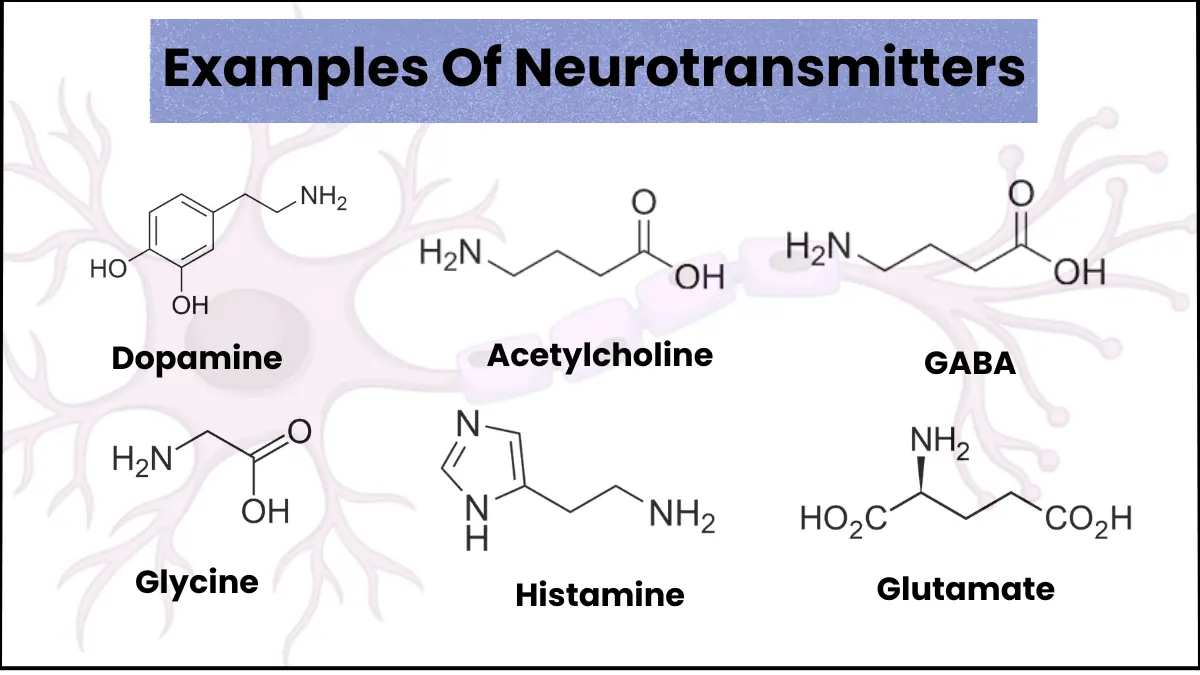
Examples of neurotransmitters include Acetylcholine, dopamine, serotonin, GABA, glutamate, histamine, oxytocin, glycine, and endorphins.
Neurotransmitters are chemical messengers in the nervous system. These chemicals control communication between brain cells and body functions. These are the signaling molecules secreted by a neuron to excite or inhibit the other neuron across synapse.
A synapse is the small place between two nerve cells. Neurons do not touch each other directly. These neurons pass signals using chemicals across this gap.
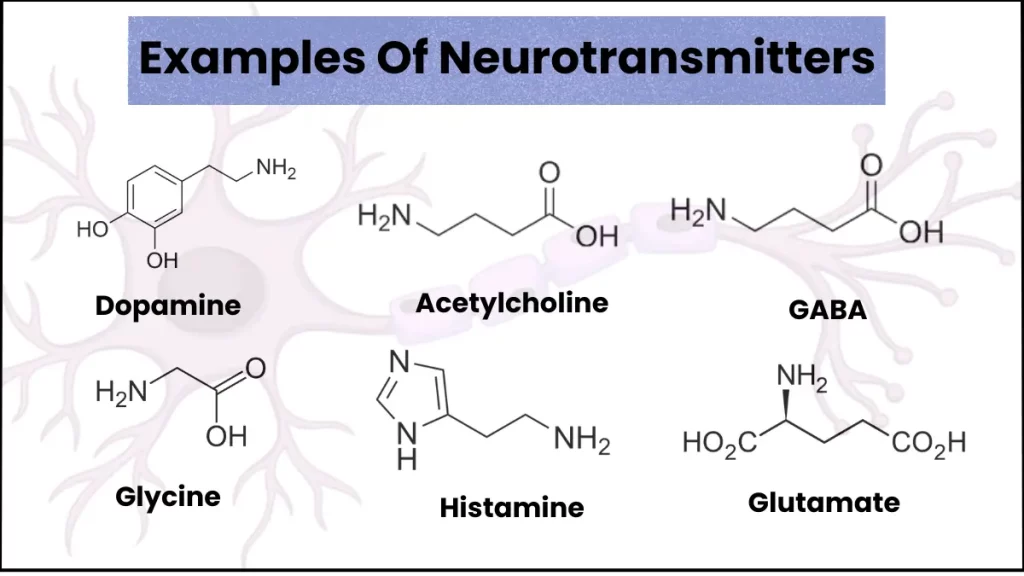
Examples of Neurotransmitters
Neurotransmitters have different roles in the body. Each neurotransmitter controls a specific function such as mood, memory, learning, sleep, movement, and even heart rate.
1. Acetylcholine
Acetylcholine plays a major role in muscle movement. When a nerve sends a signal to a muscle, it helps the muscle contract. It is also important for learning, attention, and memory. Low acetylcholine levels can cause memory loss and diseases like Alzheimer’s disease.
2. Dopamine
Dopamine is a very important neurotransmitter in the brain. It acts as a both hormone and a neurotransmitter. It is strongly linked with pleasure and reward. It helps in focus, learning, and decision-making. Dopamine is also involved in controlling body movement. A low level of dopamine can affect movement and may cause disorders like Parkinson’s disease.
3. Serotonin
Serotonin is a neurotransmitter that controls mood and emotional balance. It helps a person feel calm and balanced. It also affects sleep and appetite. Serotonin is found in both the brain and digestive system. Low serotonin levels can lead to mood swings, sadness, and sleep problems.
4. GABA
GABA is an important inhibitory neurotransmitter in the central nervous system. It reduces brain activity and helps the body relax. It helps reduce anxiety and stress. It also supports better sleep by relaxing the nervous system. Low GABA levels can lead to restlessness, sleep disorders, and anxiety.
5. Glutamate
Glutamate is the main excitatory neurotransmitter in the brain. It is important for synaptic plasticity, which is the basis of learning and memory. It strengthens communication between neurons. This makes it very important for cognitive functions. However, excessive glutamate can damage brain cells and disturb normal functions.
6. Histamine
Histamine is another neurotransmitter that controls the brain alertness. It helps keep the brain awake and focused. It also plays a role in immune reactions and allergies. It acts as a signalling molecule in both the nervous and immune systems. High histamine activity can increase wakefulness, while low activity of histamine may cause drowsiness.
7. Endorphins
Endorphins are natural chemicals(produced by the body) that reduce pain. They block pain signals and create feelings of pleasure. They are released during exercise, stress, laughter, or excitement. Endorphins help the body manage physical and emotional pain. They act as natural painkillers and help improve mood.
8. Oxytocin
Oxytocin is also known as the bonding or love hormone. It is a neuropeptide involved in emotional bonding. It is important in social bonding, trust, and relationships. It is released during breastfeeding and hugging. It is also active during childbirth. Oxytocin reduces stress hormone (cortisol) levels.
9. Glycine
Glycine is an inhibitory neurotransmitter that works mainly in the spinal cord. It helps control motor signals, sensory signals and muscle movement. It works with GABA to prevent overexcitation. It is important for smooth muscle coordination. Glycine also helps maintain balance in nerve communication.
10. Substance P
Substance P is a neuropeptide that is involved in pain transmission. It sends information about pain from the body to the brain. It is also involved in inflammation and stress responses. When Substance P is active, the brain becomes aware of pain in the body.
11. Norepinephrine
Norepinephrine helps control alertness and attention symptoms in the brain. It is released during danger or stress situation. It improves focus, reaction time, and decision making ability. It is active in the sympathetic nervous system. It increases heart rate and prepares the body for action.. It is important for quick thinking and reaction.
12. Epinephrine (Adrenaline)
Epinephrine works in emergency situations. It prepares the body for “fight or flight.” It increases heart rate, blood pressure, and energy levels. It helps the body respond quickly to danger. It is mostly released during fear, excitement, or danger situations.
13. Anandamide
Anandamide is known as a feel-good neurotransmitter. It is a lipid neurotransmitter. It helps regulate mood, memory, and appetite. It produces feelings of pleasure and relaxation. It works in a similar way to certain natural compounds in the body. Anandamide also helps reduce stress and improve emotional well-being.
14. Vasopressin
Vasopressin acts as both a hormone and a neurotransmitter. It helps control water balance in the body by reducing water loss. In the brain, it supports memory and learning. It also plays a role in social behavior and bonding. Vasopressin helps regulate blood pressure and maintain body fluid balance.
FAQs
What are neurotransmitters?
Neurotransmitters are chemical messengers in the nervous system. They carry signals from one nerve cell to another. They help the brain and body communicate. They control many functions such as mood, sleep, memory, and movement.
Which neurotransmitter is responsible for pleasure?
Dopamine is responsible for pleasure and reward. It gives a feeling of satisfaction after success. Endorphins and anandamide also create happiness and relaxation.
Can neurotransmitters be improved naturally?
Yes, neurotransmitters can improve with a healthy lifestyle. Regular exercise, proper sleep, and a balanced diet help maintain their levels. Stress management also supports brain health.
Which neurotransmitter controls memory and learning?
Acetylcholine and glutamate help in memory and learning. They improve communication between brain cells. They make it easier to store and recall information.
What are the main types of neurotransmitters?
There are three main types of neurotransmitters. Some are excitatory, which increase brain activity. Some are inhibitory, which reduce brain activity. Others are modulatory, which balance and adjust signals in the brain.